Winter Car Hire in Finland: Licence, Tyres, Rental Terms
Winter car hire in Finland: US, UK, Canadian and Australian licences, the 3 mm tyre rule, Lapland speed limits, reindeer and Enterprise deposits.
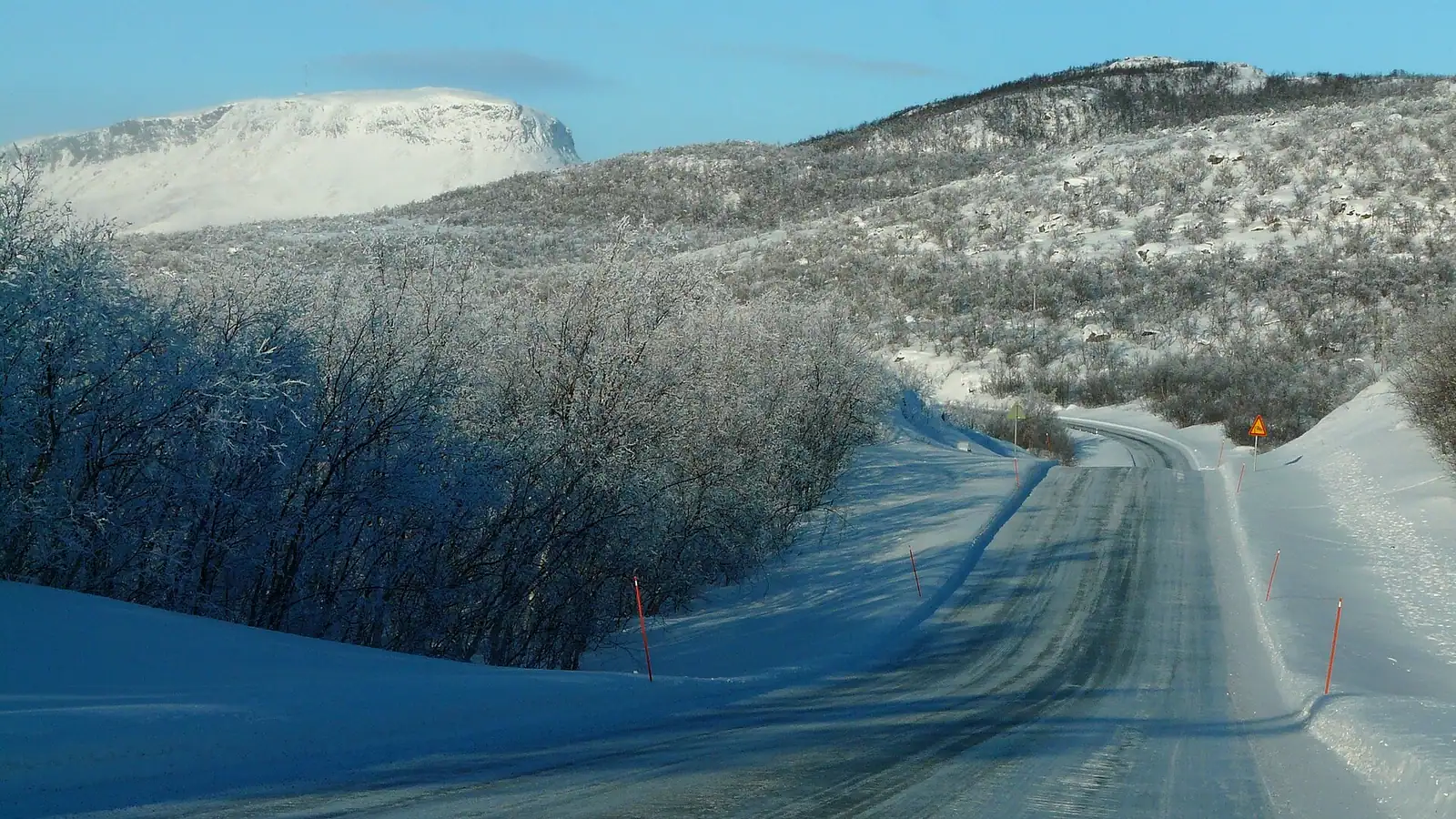
Your home licence is enough to drive a hire car in Finland if it’s from the US, UK, Canada or Australia and shows its vehicle categories and validity; if it doesn’t, carry an international driving permit or an official translation with it. Enterprise’s desks at Rovaniemi and Kittilä airports rent from age 19 against a €300 deposit on a credit card in the renter’s name. The winter rules are more specific than “get winter tyres”: a 3 mm legal tread, speed limits in Lapland that dropped on 28 October 2026 to 100 km/h on motorways and mostly 80 km/h on other main roads, and 3,300 to 4,500 reindeer collisions a year.
Traffic law is set by Traficom and the Road Traffic Act, and the contract is set by the rental company. Their rules are given here as published on 17 November 2026; the signed agreement and the signs on the road overrule anything on this page.
Licence: what US, UK, Canadian and Australian drivers need
Traficom lists the US, UK, Canada and Australia among the Contracting States to the Geneva and Vienna road-traffic conventions, so a valid national licence from any of the four is enough for a visit, as long as it clearly shows the vehicle categories and its validity. If yours doesn’t show both, you’ll need an international driving permit or an official translation into Finnish, Swedish or English to show the police. The rental company sets its own entry bar: the Finnish Car Rental Association’s general terms, valid from 12 June 2024, require at least one year of driving experience, and Avis says it won’t rent to anyone whose licence is under a year old.
Minimum age is the rental company’s choice, and it varies. Enterprise’s pages for Rovaniemi Airport and Kittilä Airport both give 19 for every car group except Premium Wagon, which is 25, plus a €20 surcharge per rental, not per day, for renters aged 19 to 24, including VAT.
Winter tyres: the rule and what the desk fits
Winter tyres are used according to conditions from 1 November to 31 March, says Liikenneturva, and Traficom’s wording is the same: in force during that period when the weather requires. Minimum tread on winter tyres is 3 mm, against 1.6 mm for summer tyres; Liikenneturva adds that grip falls long before those limits, so 3 mm is what the law asks for, and it isn’t a good tyre. Since 1 December 2024 an M+S marking alone no longer suffices: a winter tyre needs the three-peak mountain snowflake symbol (3PMSF) or studs.
Studded tyres are allowed from 1 November to 31 March and outside it when weather or roads require, and on a car they must be fitted on all wheels. Non-studded tyres, often called friction tyres, come in designs for Nordic and for central European winters. Budget Finland says its Finnish cars carry winter tyres when the season or law requires them and calls studded tyres the most common type there. It also says a customer collecting in southern Finland in autumn or spring and driving north should tell Budget well in advance, so the car can be fitted for the route.
Budget’s winter page adds one practical item: if the car has an engine heater, plug it in 30 to 60 minutes before leaving, and press the on-button for 1 to 2 seconds. Without a heater, start the engine a couple of minutes before driving.
Winter speed limits and the dark months
Lapland’s winter and dark-season limits took effect on Wednesday 28 October 2026, according to Lapland’s Economic Development Centre (Lapin elinvoimakeskus). Motorway limits of 120 km/h drop to 100 km/h, and 100 km/h on main, trunk and regional roads drops mostly to 80 km/h. Some stretches keep 100 km/h, among them parts of main roads 4, 5, 21 and 29 and trunk roads 79 and 82, and at Välttikangas and Apukka on main road 4 and at Olleronvaara on trunk road 79 the limit falls to 60 km/h. The centre says each new limit applies once its sign is changed, so if the sign hasn’t changed yet, the old limit still applies, whatever the date. Normal limits return at the turn of March and April 2027, once driving conditions improve.
Nationwide, Liikenneturva puts the value of the winter and dark-time limits at eight lives and about 36 injuries a year, and notes that two thirds of injury accidents happen in low light or darkness, 40 per cent of those where the limit is 100 km/h. It names bridges and shaded stretches as the places black ice forms first.
Reindeer on the road
Reindeer collisions run between 3,300 and 4,500 a year over the decade measured in Traficom’s 2019 Porokello study, with repair costs of €15 to €20 million a year. Drivers aren’t often hurt: the Finnish Transport Infrastructure Agency’s register shows two fatal reindeer collisions in 2011 to 2018, both in 2014. Liikenneturva puts the greatest risk for collisions with deer, elk and reindeer in September to December, and Traficom’s report ties the autumn peak to herds moving to winter pastures and to the dark.
In those months, slow down on roads through reindeer country. The Finnish Car Rental Association’s terms require the renter to report animal damage to the police as well as to the rental company, so a collision involves two calls, plus 112 if anyone is hurt. The travel insurance guide covers 112 and medical cover.
The contract: deposit, border and ice roads
At Rovaniemi and Kittilä, Enterprise takes a €300 deposit for every vehicle class on top of the estimated rental cost, accepts Visa, MasterCard and American Express in the renter’s name, and refuses prepaid cards, debit cards, cash and cheques. Both desks open 08:00 to 22:00 (Kittilä’s page shows that timetable for 15 November 2026). In Helsinki, Enterprise’s airport desk opens 07:00 to 23:00 Monday to Friday, 09:00 to 20:00 on Saturday and 09:00 to 23:00 on Sunday (week of 15 November 2026), with the same age, deposit and border terms as in Lapland. Taking the car abroad is allowed to Sweden and Norway only, for €60 per rental, with authorisation from the branch beforehand; driving over the border without it breaches the contract. The Association’s terms say the same in general: crossing the Finnish border needs the rental company’s written permission, and Avis repeats that for its cars.
Three more clauses from the Association’s terms matter in winter. Driving on ice outside officially marked ice roads is prohibited, so a frozen lake isn’t a road unless a sign says it is. The renter is fully liable for the windscreen, tyres, rims and hubcaps unless an extra fee removes that liability, and for damage after driving with wrongly inflated tyres. Pets and smoking aren’t allowed in the car.
Where a hire car fits a Lapland week
A car matters on the stretch between the railway and the resort: Rovaniemi to Levi is 170 km, and the five-day winter route drives 299 km in all, with one long drive of 2 h 23 min. The route doesn’t need a car for its two days in Rovaniemi, so it collects one on the morning of day 3, and because it flies home from Kittilä, the rental is one-way: price the drop-off with the supplier you pick. The transport guide has the night trains, flights and resort buses; the Finnish Lapland guide compares the bases, and Helsinki is walkable without a car.
At the desk
Before leaving the car park, walk round the car with the condition report and photograph the windscreen, the four tyres and the rims, since those are the parts the renter pays for unless an extra covers them. You’ll want to look at the tyre sidewall for the 3PMSF symbol or studs, find the engine-heater plug, and note the roadside number from the agreement. Winter clothing and luggage for the week go in before the final look, so you’ll know the driver can see out of every window.
Photos
Read also

Before you go · 7 min read
Finland Before You Go: Entry Rules, Light and Cold
Updated · 17 November 2026Visa-free 90 days for US, UK, Canadian and Australian passports, EES and ETIAS in November 2026, daylight and monthly temperatures, and winter kit.

Transport · 10 min read
Helsinki to Lapland: Night Train, Day Train or Flight
Updated · 17 November 2026Helsinki to Rovaniemi by VR night train, day train or Finnair: winter 2026-27 times, cabins, baggage, resort buses and the cost for two.

Insurance · 7 min read
Finland Winter Travel Insurance: Who Pays for What
Updated · 17 November 2026Who pays for Finnish hospital care by passport, 112 and rescue costs, and what SafetyWing Essential covers on skis, sleds and snowmobiles.

Food · 6 min read
Finnish Food: What to Order, Where and What It Costs
Updated · 17 November 2026Salmon soup €15-23, sautéed reindeer €30-36, muikku lunch €14: Finnish dishes at named places in Helsinki, Rovaniemi and Kuopio, priced in November 2026.