Finland Before You Go: Entry Rules, Light and Cold
Visa-free 90 days for US, UK, Canadian and Australian passports, EES and ETIAS in November 2026, daylight and monthly temperatures, and winter kit.
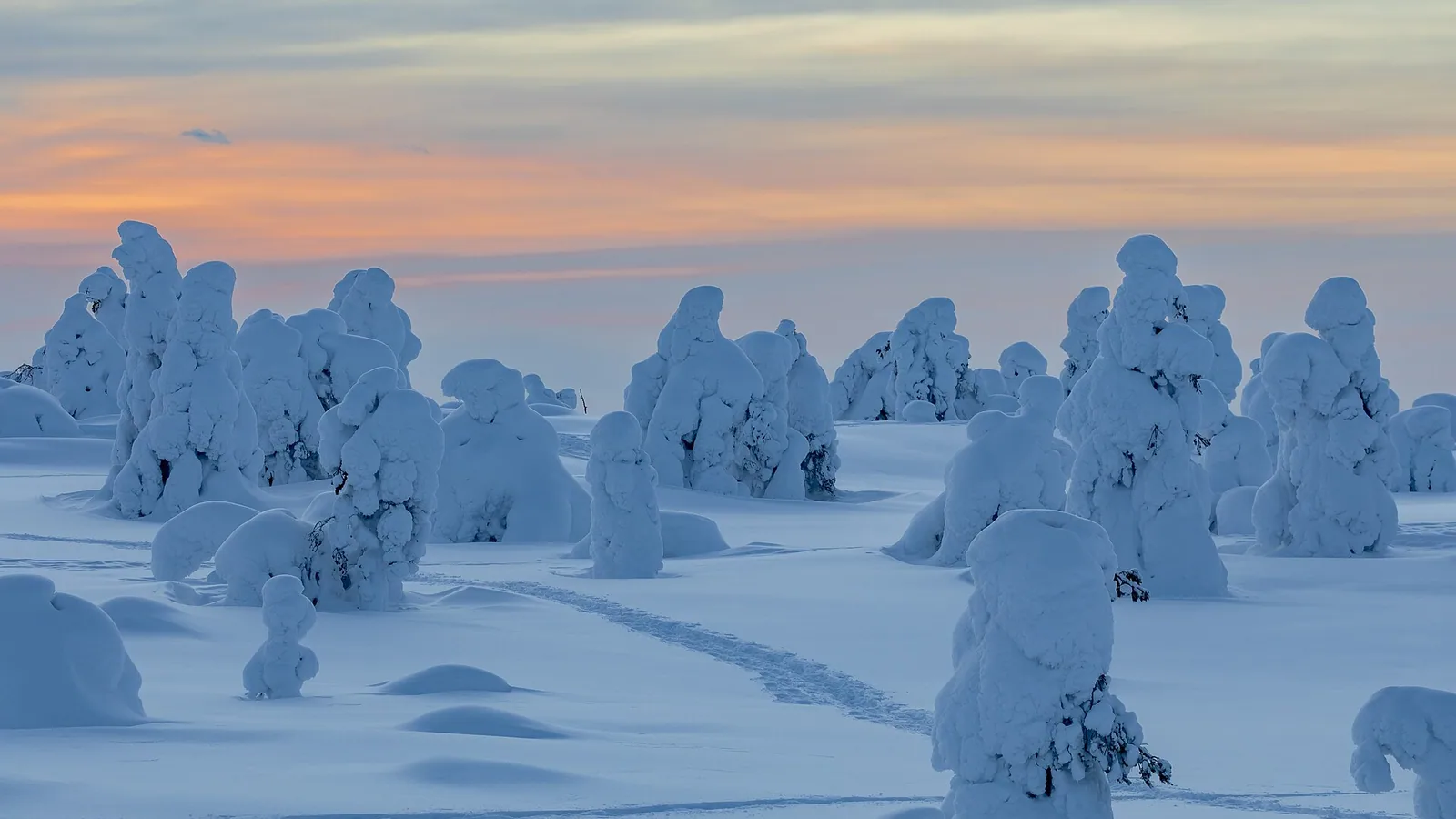
US, UK, Canadian and Australian passport holders enter Finland without a visa for up to 90 days in any 180-day period, provided the passport stays valid for three months after the day they leave the Schengen area and was issued within the previous ten years. The harder calls are light and cold, and they’re where trips go wrong. Rovaniemi gets about 2.5 hours of daylight in December, with a monthly mean of -8.6 °C, and about 12 hours in March, with a mean of -6.6 °C. Helsinki’s December averages -0.7 °C over 1991-2020.
Entry rules change. The Finnish Border Guard applies them at the crossing, the Finnish Ministry for Foreign Affairs publishes Finland’s version and the European Commission runs the EU systems. Everything below was read on those pages on 17 November 2026. A different nationality, a second passport or a residence permit puts you under other rules, so open the linked page for your case before you pay for non-refundable flights.
Entry: 90 days, three months and ten years
Canada’s government says Canadian citizens need no visa for Schengen stays of up to 90 days in any 180-day period, and the UK government says the same for British citizens. The United States, Australia and Canada all appear on Annex II of the EU’s visa-free regulation. The 90 days are counted across every Schengen country together, so it’s a shared allowance: a week in Estonia or Sweden before your flight into Helsinki uses part of it.
Your passport has to stay valid for at least three months after the day you leave Schengen and must have been issued within the previous ten years, under Article 6(1)(a) of the Schengen Borders Code. The Finnish ministry’s visa page words the first rule once as “ninety days” and once as “three (3) months”, so count three calendar months from your departure date and add a few days of margin: ninety days can land a day or two either side of that.
The ten-year test catches people who’ve got a valid-looking passport. The UK government warns that a British passport renewed before 1 October 2018 might have an issue date more than ten years back, which makes it unusable for Schengen entry even with a future expiry date. At the border, the UK page adds, officers may ask for proof of accommodation, a return or onward ticket and enough money for the stay.
EES is running; ETIAS is not
The European Commission states that the Entry/Exit System “became fully operational on 10 April 2026”. On a first arrival you may be asked to register fingerprints and a photo; the UK government says there’s no fee, that children aged 11 or under aren’t fingerprinted but may be photographed, and that EES replaces the passport stamp. It also advises allowing extra time on departure, because EES checks can take place before boarding.
ETIAS is a different thing. On 17 November 2026 the Commission page says “ETIAS is currently not in operation and no applications for travel authorisations are collected”, and that the EU will announce the start date several months in advance. With no start date announced, a December 2026 trip doesn’t need an ETIAS authorisation, and any site selling one today isn’t the Commission. For any date in 2027, reopen the Commission’s page the week you book.
Light and temperature, month by month
The table gives the Finnish Meteorological Institute’s climate normals for 1991-2020, the monthly mean temperatures at Helsinki Kaisaniemi, Rovaniemi Apukka and Utsjoki Kevo. Apukka lies outside Rovaniemi and runs colder in winter than FMI’s station at Rovaniemi airport, -11.7 °C against -10.3 °C in January, so treat its column as the cold side of the range.
| Month | Helsinki | Rovaniemi | Utsjoki |
|---|---|---|---|
| January | -3.1 °C | -11.7 °C | -13.3 °C |
| February | -3.8 °C | -11.6 °C | -12.6 °C |
| March | -0.7 °C | -6.6 °C | -7.8 °C |
| April | 4.4 °C | -0.2 °C | -1.9 °C |
| May | 10.4 °C | 6.4 °C | 4.2 °C |
| June | 14.9 °C | 12.5 °C | 9.8 °C |
| July | 18.1 °C | 15.5 °C | 13.4 °C |
| August | 16.9 °C | 12.9 °C | 11.1 °C |
| September | 12.3 °C | 7.6 °C | 6.4 °C |
| October | 6.6 °C | 0.8 °C | -0.4 °C |
| November | 2.4 °C | -4.5 °C | -7.2 °C |
| December | -0.7 °C | -8.6 °C | -10.6 °C |
Averages hide the cold snaps, and FMI’s normals don’t count them, so this guide counted FMI’s daily minimum temperatures for January and February 1991-2020: Rovaniemi Apukka had about 23 days a winter at -20 °C or lower and about 8 at -30 °C or lower; Utsjoki Kevo had about 25 and 8; Helsinki Kaisaniemi had about 2 and none. That’s the gap between a city break and a Lapland week, and it’s why the kit advice below splits in two.
Light moves just as fast, and you’ll notice it before the cold does. Visit Rovaniemi’s seasonal pages give about 7 hours of daylight at the start of November, falling to an average of about 5 by the end of the month, then 2.5 hours in December, 4 in January, 8 in February, 12 in March and 15 in April. Helsinki’s shortest day is under 6 hours, according to the Finnish foreign ministry’s finland.fi. In Utsjoki the polar night, kaamos, lasts almost two months; Sodankylä gets four days of it. Rovaniemi’s midnight sun runs officially from early June to early July, with light round the clock from the end of May to early August.
The aurora depends on the same darkness, so it’s the first thing to fix in the plan. The Finnish Meteorological Institute says summer nights are generally too light for seeing the auroras, and that, weather considered, March and early April are favoured in Northern Finland. The aurora guide covers where to stand; the five-day winter route shows what a December or March week looks like in Rovaniemi and Levi.
Dressing for -20 °C
Visit Finland’s layering advice is concrete. Next to the skin goes merino wool, bamboo, silk or a technical fabric that moves moisture off the skin. The middle layers are thinner for active days (skiing, snowshoeing) and thicker for standing around in town, and they should be loose, because snug layers hold less air and feel colder. The outer coat should be windproof and waterproof with a hood; warmth comes from the quality of the filling and not from thickness.
Two decisions follow from the table, and they don’t overlap. In Helsinki between December and March, one good coat, a wool or fleece mid-layer and waterproof boots cover days around the freezing point. In Lapland in January or February, the cold-snap count above means the kit needs to work while you stand still outside for an hour, which a city coat won’t manage.
- Base layer: two sets, merino or technical
- Mid-layer: wool sweater or fleece, in a size that fits over the base layer
- Outer: windproof, waterproof coat with a hood, and trousers to match
- Boots with room for the toes and a spare dry pair of socks
- Warm hat, scarf or buff, and mittens
- A thin liner glove for using a phone
Healthcare, transport and driving
Medical cover, rescue and 112 are in the winter travel insurance article: which passports get treated at resident fees in Finland (UK and EU cards, Australian residents) and which pay the full cost (US and Canadian visitors). The night train, flights and airport buses have their own article, trains and planes, and winter tyres and rental terms sit in the car hire guide. For the capital itself, the Helsinki guide has the neighbourhoods, and the Lapland guide compares Rovaniemi, Levi and the other bases.
Photos
Read also

Transport · 10 min read
Helsinki to Lapland: Night Train, Day Train or Flight
Updated · 17 November 2026Helsinki to Rovaniemi by VR night train, day train or Finnair: winter 2026-27 times, cabins, baggage, resort buses and the cost for two.

Car hire · 7 min read
Winter Car Hire in Finland: Licence, Tyres, Rental Terms
Updated · 17 November 2026Winter car hire in Finland: US, UK, Canadian and Australian licences, the 3 mm tyre rule, Lapland speed limits, reindeer and Enterprise deposits.

Insurance · 7 min read
Finland Winter Travel Insurance: Who Pays for What
Updated · 17 November 2026Who pays for Finnish hospital care by passport, 112 and rescue costs, and what SafetyWing Essential covers on skis, sleds and snowmobiles.

Food · 6 min read
Finnish Food: What to Order, Where and What It Costs
Updated · 17 November 2026Salmon soup €15-23, sautéed reindeer €30-36, muikku lunch €14: Finnish dishes at named places in Helsinki, Rovaniemi and Kuopio, priced in November 2026.